Charles Mingus was a fountain of serviceable guidance If the jazz pithecanthropus erectus said it, so shall it be.
Look no further than any fable of Faubus. Not a single lie can be found within.
A fellow human being with ties to the state of Arizona, the author has long felt a certain sense of deference towards the bass player extraordinaire, despite lacking geographic proximity to the city Nogales; not to mention an inability to relate to with any hellview of Bellevue. Still, respect leads to admiration. Mingus Ah Um was, in fact, the first jazz album voluntarily listened to be the author.
More importantly, Mingus gave rise to the careers of Eric Dolphy and Dannie Richmond, among others. The man's imagination, too, was impeccable. While flooded with information, the digital age is full of voids and vacuums. But no loss is greater,with respect to musical enjoyment, than the now wayward art of liner notes. Both the words which grace innard of Black Saint and the Sinner Lady, as well as the source, are now well known. But it this lesser known thought which merits revisiting at the moment: "I'm going to keep on finding out the kind of man I am through my music [...] But the reason it's difficult is because I'm changing all the time."
One such example is the incorrigible bassline that begins "Haitian Fight Song." Originally released on the 1957 album The Clown with a sextet, the song was ultimately revisited and re-recorded. Six years later the composition resurfaces as something of a suite on Mingus Mingus Mingus Mingus. Now titled "II BS" the outfit is much larger and the track's power more dense. None other than the RZA ultimately facilitates the song into a released of his own, but such a remix is not of great concern at the moment. Instead, attention should be drawn towards the above quote; but only for a moment. If people change, why should any art remain the same. Music, as is the case in life, is a tapestry constantly changing patterns while remaining recognizably intact. For just such a reason is it important to learn from the best
All gazes, however, should now fixate on "Haitian" portion.
What can be heard below is a 45-minute mix of Haitian music compiled and curated by DJ Sixaf who is, coincidentally, not from the island of Hispaniola. Instead, the man is based out of Martinique; the common thread being French. A regular fixture - alongside DJ Payou and Rise Up! - on NRJ Antilles radio, it is the good DJ's SoundCloud page which merits being called a "gem." In addition to guest mixes from his radio show, Sixaf uploads the occasional old-school genre mix; although mostly zouk and kizomba.
But the present selection is different.
A gross gloss would read that gouyad is a distant cousin of zouk. Existing on a similar timeline with zouk-love, the songs have a similar R&B feel. The source for gouyad, however, lies elsewhere. Like a batida to a kuduro, it seems that gouyad serves a similar purpose for kompa music; the latter of which is itself a variation of méringue. The sounds are more electronic and instrumental. Rather feign any more knowledge, though, the author would rather share his initial impressions of a musical style previously unknown to him: what zouk might sound like were it to be played by a cumbia band. As with tarraxo, the tempo familiar rhythm on a has been slowed. A single, consistent element of syncopation is heard on the backbeat. Melodically, though, the sounds are delightfully reminiscent of Latin American creations past; especially this song by the Argentinian band Damas Gratis (or alternatively, the run on this Tego Calderon classic). None of which is meant to short-sell what the smooth bass stylings.
Certainly a worthwhile listen and download. Like good people, good music, it seems, finds a way to change for the better.
- J.N.
A Noggle Brain Trust, LLP. website
Tuesday, June 9, 2015

Friday, June 5, 2015
Dj BlackinhO [DDPR] - "Funana Batucada"
The world-over is forever suffering.
Misery manages to never end or to change.
It should be noted, though, that the author is far from qualified from giving even a faux-Buddhist lecture. With any luck, eight semi-Noble jokes can be written. Instead it will be said that perpetual and reckless, pain portends to the back of life like hair on the back of a beatnik's skull. Dharma bums are left strewn all about at the jazz club as a result; after-hours festivities not having yet begin. Shadows linger on in a city that refuses to sleep. No one at this scene will be directed to glory by Cassavetes. Some of the greatest minds of any generation have been lost to impatience. The present proves to be nothing like an exception. The best advice that can be given is to stay on the road. Even if it is not paved, an innocuous path can lead to a non-vacuous place.
Also, find joy.
Each of the five senses may be empty and void, but pleasure is nothing to righteously jettison. The heart of the year is now in full swing, readers; and as any resident of the northern hemisphere knows. temperatures are on the cusp of an unpreventable vertical climb. All that can be done is to brace the onslaught and hope for the best. A solution, however, exists for just such a case. Largely unheard from since last September, Dj BlackinhO returns with a vengeance. Once again, the DDPR beat-maker proves that anything and everything funana will gleefully be posted on these pages. Released yesterday, "Funana Batucada,' is fairly self explanatory. A very fast tempo is established by a singular snare drum accompanied by a four-to-the-floor bass. Peripheral elements - djembe, crash cymbal, and cowbell are all used in support or transition - are heard, but the song is genuine and direct. On a delightfully traditional, dueling accordions compose the melody and harmony to great effect over the sixteen-beat bars. But most interesting, perhaps, is the palindromic structure of the song as a whole. Laid as as Introduction-A-B-Interlude-C-B-A-Outro(B) it seems the song could be played in either direction to much the same effect.
Strong infectious effort, the download is certainly recommended.
Notable Mention: Dj Kelven - "Cabo Verde Show 2 ( Batida )"
The second selection less relevant.
Fortunately, no expiration date exists on good vibes.
So while the song that follows was released two weeks ago, a concise discussion is still in order. After all, a rational reason does exist for excluding the Nice based Dj Kelven from this post. Not only is style identical, but even the keywords that have been employed are genetically similar. Titled, "Cabo Verde Show 2 (Batida)," the blistering snare drums and four-to-the-floor bass are indistinguishable. But unlike Blackinho's track, Kelven is neither minimal nor traditional. In lieu of accordions and guitars, two high-pitched synths are used instead. Tambourine is employed during the warm-up as well as the occasional crash cymbal. Of note, as well, as the hype samples used: the sound of DJ Khaled from "I'm a Boss" as well as O.T. Genasis Most of the festivities Interestingly enough, though, But most of the syncopation comes from other vocal samples; of which four are heard throughout, including a brief baile funk break. The result is much more of a brincadeira, high energy and flexible, but such a distinction only limits. A very strong effort over all.
- J.N.
Misery manages to never end or to change.
It should be noted, though, that the author is far from qualified from giving even a faux-Buddhist lecture. With any luck, eight semi-Noble jokes can be written. Instead it will be said that perpetual and reckless, pain portends to the back of life like hair on the back of a beatnik's skull. Dharma bums are left strewn all about at the jazz club as a result; after-hours festivities not having yet begin. Shadows linger on in a city that refuses to sleep. No one at this scene will be directed to glory by Cassavetes. Some of the greatest minds of any generation have been lost to impatience. The present proves to be nothing like an exception. The best advice that can be given is to stay on the road. Even if it is not paved, an innocuous path can lead to a non-vacuous place.
Also, find joy.
Each of the five senses may be empty and void, but pleasure is nothing to righteously jettison. The heart of the year is now in full swing, readers; and as any resident of the northern hemisphere knows. temperatures are on the cusp of an unpreventable vertical climb. All that can be done is to brace the onslaught and hope for the best. A solution, however, exists for just such a case. Largely unheard from since last September, Dj BlackinhO returns with a vengeance. Once again, the DDPR beat-maker proves that anything and everything funana will gleefully be posted on these pages. Released yesterday, "Funana Batucada,' is fairly self explanatory. A very fast tempo is established by a singular snare drum accompanied by a four-to-the-floor bass. Peripheral elements - djembe, crash cymbal, and cowbell are all used in support or transition - are heard, but the song is genuine and direct. On a delightfully traditional, dueling accordions compose the melody and harmony to great effect over the sixteen-beat bars. But most interesting, perhaps, is the palindromic structure of the song as a whole. Laid as as Introduction-A-B-Interlude-C-B-A-Outro(B) it seems the song could be played in either direction to much the same effect.
Strong infectious effort, the download is certainly recommended.
Notable Mention: Dj Kelven - "Cabo Verde Show 2 ( Batida )"
The second selection less relevant.
Fortunately, no expiration date exists on good vibes.
So while the song that follows was released two weeks ago, a concise discussion is still in order. After all, a rational reason does exist for excluding the Nice based Dj Kelven from this post. Not only is style identical, but even the keywords that have been employed are genetically similar. Titled, "Cabo Verde Show 2 (Batida)," the blistering snare drums and four-to-the-floor bass are indistinguishable. But unlike Blackinho's track, Kelven is neither minimal nor traditional. In lieu of accordions and guitars, two high-pitched synths are used instead. Tambourine is employed during the warm-up as well as the occasional crash cymbal. Of note, as well, as the hype samples used: the sound of DJ Khaled from "I'm a Boss" as well as O.T. Genasis Most of the festivities Interestingly enough, though, But most of the syncopation comes from other vocal samples; of which four are heard throughout, including a brief baile funk break. The result is much more of a brincadeira, high energy and flexible, but such a distinction only limits. A very strong effort over all.
- J.N.
A Noggle Brain Trust, LLP. website
Thursday, June 4, 2015
Frankie Lopez - "'All Day' Live Freestyle (One Day)"
Consistency is an illusion.
Each and every rule comes with a corresponding exception.
As is the case with traffic signals, change is imminent. While any color light may seem, at the time, permanent, such is never the case. Perhaps unfortunately, the world is full of nuances. The era of black and white pictures is best left to westerns. This modern world is full of Venn diagram overlaps and grey areas.
The opinions expressed on these pages, though, are subject to the same scrutiny.
Granted, the subject has never come up. Obadiah Parker, much like Girl Talk, were prominent figures or the late 2000s; long before this project began. But in very different ways much the same goals were accomplished. Via Tron configurations and a mandolin wider audiences were reached than otherwise would have been. Rather than alter a finished product into a unique creation, something not unlike a repackaging took place. Jazz and reggae re-cuts, or cello metal, work much the same way
For just such a reason, the views of known Twitter user, and Doctor of Rap-Squats, Mr. Bauce Sauce, are typically adhered to.
But, as already stated, intransigence is esobsolete.
Although the author can only claim to have ever heard one Kanye West album in full - 808s and Heartbreak to be precise - various singles have been enjoyed as well. So why, then, must all acoustic covers of rap songs be negative? So, for no other reason, the song below is presented care of Tucson, Arizona's own, Frankie Lopez.
The author's ties to the city notwithstanding, a full disclosure is in order. Some award winning work in "light holding" from this 2013 scene in particular are of note. Far more important, though, was the editing process. Afterward, back at the director's apartment, Frankie played a track from his then recent mixtape titled "Lamboes and Hoes." Eardrums were slapped silly by the subwoofer. In contrast to the song everyone had heard two-dozen times that evening, a trap edge was unavoidable. Still sensibly pop music, the fluidity between soft and hard solid states was evident. Not to mention what can only be described as the property of having fun.
And by whatever cosmic coincidence, it all comes together now, in a back-lit room.
What follows is still not a western. Regardless, the Ennio Morricone whistle that is heard in the latter half of Kanye West's single is used as a jumping off point. Suddenly, electronic drums and a walloping bass are played; less theatrically than That 1 Guy but still intriguing as a hybrid. A grey area is essentially explored. In a potent brew chilled by the cool cubes of effortlessness, the Old Pueblo's Fonzi strums chords that spell out fun. Despite a mood which would better befit a Blue Angel, no overbearing sense of self-importance is shown. Almost immediately, in fact, a some self-deprecation is exhibited concerning the mixtape mentioned above. A sense of dub is infused into the hook but altogether the voice is befitting. What would otherwise be described as shy or hesitant comes off as tamed swagger; the gruff edge of a man aware of his potential but unwilling to give it all away for free. Frankie's camera presence is still very strong. Overall the content is thin, heavily relying on boasts, but nothing off the dome can truly be criticized.
Carefully avoiding the path trod by Elvis Presley, what is most impressive here is the discipline and dedication. Every professional must first be an amateur; but to be an amateur often requires self-motivation (which does not pay the bills). Doubt is sure to follow With time, however, improvement is shown and the video in question proves such a point. A desire to improve is clear..
Frankie Lopez's fifteen minutes are yet to come; and if the author were bold enough to venture a guess, he would say it will happen on Vine. Likely during a sunny summer day rather than a weekend evening; and more probably than not at a Tucson bus-stop than the bars on Fourth Avenue. Such a scene, though, only seems peculiar. Bus stops in the heart of Pima county are a mysterious and queer place. For whatever reason, everyone at these locations feels the need to converse. Within five minutes of sitting on any bench in the cite, one may become privy to a previously unknown life story: exactly the kind of warm, genuine human moment by an individual and their musical instrument.
- J.N.
Each and every rule comes with a corresponding exception.
As is the case with traffic signals, change is imminent. While any color light may seem, at the time, permanent, such is never the case. Perhaps unfortunately, the world is full of nuances. The era of black and white pictures is best left to westerns. This modern world is full of Venn diagram overlaps and grey areas.
The opinions expressed on these pages, though, are subject to the same scrutiny.
Granted, the subject has never come up. Obadiah Parker, much like Girl Talk, were prominent figures or the late 2000s; long before this project began. But in very different ways much the same goals were accomplished. Via Tron configurations and a mandolin wider audiences were reached than otherwise would have been. Rather than alter a finished product into a unique creation, something not unlike a repackaging took place. Jazz and reggae re-cuts, or cello metal, work much the same way
For just such a reason, the views of known Twitter user, and Doctor of Rap-Squats, Mr. Bauce Sauce, are typically adhered to.
But, as already stated, intransigence is esobsolete.
Although the author can only claim to have ever heard one Kanye West album in full - 808s and Heartbreak to be precise - various singles have been enjoyed as well. So why, then, must all acoustic covers of rap songs be negative? So, for no other reason, the song below is presented care of Tucson, Arizona's own, Frankie Lopez.
The author's ties to the city notwithstanding, a full disclosure is in order. Some award winning work in "light holding" from this 2013 scene in particular are of note. Far more important, though, was the editing process. Afterward, back at the director's apartment, Frankie played a track from his then recent mixtape titled "Lamboes and Hoes." Eardrums were slapped silly by the subwoofer. In contrast to the song everyone had heard two-dozen times that evening, a trap edge was unavoidable. Still sensibly pop music, the fluidity between soft and hard solid states was evident. Not to mention what can only be described as the property of having fun.
And by whatever cosmic coincidence, it all comes together now, in a back-lit room.
What follows is still not a western. Regardless, the Ennio Morricone whistle that is heard in the latter half of Kanye West's single is used as a jumping off point. Suddenly, electronic drums and a walloping bass are played; less theatrically than That 1 Guy but still intriguing as a hybrid. A grey area is essentially explored. In a potent brew chilled by the cool cubes of effortlessness, the Old Pueblo's Fonzi strums chords that spell out fun. Despite a mood which would better befit a Blue Angel, no overbearing sense of self-importance is shown. Almost immediately, in fact, a some self-deprecation is exhibited concerning the mixtape mentioned above. A sense of dub is infused into the hook but altogether the voice is befitting. What would otherwise be described as shy or hesitant comes off as tamed swagger; the gruff edge of a man aware of his potential but unwilling to give it all away for free. Frankie's camera presence is still very strong. Overall the content is thin, heavily relying on boasts, but nothing off the dome can truly be criticized.
Carefully avoiding the path trod by Elvis Presley, what is most impressive here is the discipline and dedication. Every professional must first be an amateur; but to be an amateur often requires self-motivation (which does not pay the bills). Doubt is sure to follow With time, however, improvement is shown and the video in question proves such a point. A desire to improve is clear..
Frankie Lopez's fifteen minutes are yet to come; and if the author were bold enough to venture a guess, he would say it will happen on Vine. Likely during a sunny summer day rather than a weekend evening; and more probably than not at a Tucson bus-stop than the bars on Fourth Avenue. Such a scene, though, only seems peculiar. Bus stops in the heart of Pima county are a mysterious and queer place. For whatever reason, everyone at these locations feels the need to converse. Within five minutes of sitting on any bench in the cite, one may become privy to a previously unknown life story: exactly the kind of warm, genuine human moment by an individual and their musical instrument.
- J.N.
A Noggle Brain Trust, LLP. website
Wednesday, June 3, 2015
DJ Set I can't Ado Much About - Didjè Tyson x B2S "Road to Summer in Paris (Live)"
Elders are to be respected.
Dancehall, however, should be revered.
Go forth and raise shrines. Jamaican vibes should be worshipped by I-and-I. Fortunately, open source blueprints have already been provided. No architect need be contracted. But although born of sound system culture, the concept has expanded beyond the Caribbean. A kami of musical styles, dancehall is ubiquitous. The influence is strong and boundless. Ties with hip-hop are evident and variations such as reggaeton spring forth on occasion. While immediately preceded by garage, drum 'n' bass, and jungle, the link between grime is firmly rooted in the swagger of champions.
The current selection is merely another branch on this firmly rooted tree.
In contrast to the above examples, though, what follows is not entirely an offshoot. Likewise, a free-standing hybrid, as in the sense of kwaito, does not seem wholly analogous. Alas, what follows is very much dancehall. The tradition of 1980s and 1990s beats is carried with modern aesthetic flare. But aside from the serendipitous live aspect, the mix below contains one more unique quality unique to its French origin. A local scene - a personal touch - is promoted. Which is to say that Jamaica is not the only island to be prominently featured. Granted, an english language track, not unlike Vybz Kartel's "Straight and Narrow," is bound to be heard. But, then again, so is MrSM. Direct from Martinique with the song "2 Minutes Krazé Kay," the Antillean style is combines aspects of kizomba (vocals) and zouk (instrumentation) with reggae (harmony/melody) and dancehall (delivery). As in Puerto Rico, a familiar drum pattern is used to establish beat will frequently be syncopated by vocals; worthy of an exploratory post all its own.
On a DJ front, though, the ability to maintain a consistently high energy level throughout a half hour.
- J.N.
A Noggle Brain Trust, LLP. website
Dancehall, however, should be revered.
Go forth and raise shrines. Jamaican vibes should be worshipped by I-and-I. Fortunately, open source blueprints have already been provided. No architect need be contracted. But although born of sound system culture, the concept has expanded beyond the Caribbean. A kami of musical styles, dancehall is ubiquitous. The influence is strong and boundless. Ties with hip-hop are evident and variations such as reggaeton spring forth on occasion. While immediately preceded by garage, drum 'n' bass, and jungle, the link between grime is firmly rooted in the swagger of champions.
The current selection is merely another branch on this firmly rooted tree.
In contrast to the above examples, though, what follows is not entirely an offshoot. Likewise, a free-standing hybrid, as in the sense of kwaito, does not seem wholly analogous. Alas, what follows is very much dancehall. The tradition of 1980s and 1990s beats is carried with modern aesthetic flare. But aside from the serendipitous live aspect, the mix below contains one more unique quality unique to its French origin. A local scene - a personal touch - is promoted. Which is to say that Jamaica is not the only island to be prominently featured. Granted, an english language track, not unlike Vybz Kartel's "Straight and Narrow," is bound to be heard. But, then again, so is MrSM. Direct from Martinique with the song "2 Minutes Krazé Kay," the Antillean style is combines aspects of kizomba (vocals) and zouk (instrumentation) with reggae (harmony/melody) and dancehall (delivery). As in Puerto Rico, a familiar drum pattern is used to establish beat will frequently be syncopated by vocals; worthy of an exploratory post all its own.
On a DJ front, though, the ability to maintain a consistently high energy level throughout a half hour.
- J.N.
A Noggle Brain Trust, LLP. website
DJ Set I can't Ado Much Abou - Skaytah SaKaFet "PRI DIFÉ VOL.2 MIX (JUIN 2015)"
Immovable objects have the authori-tah to stop an immovable force.
Such an action falls well within Judge Newton's jurisdiction.
Living in a realm all its own, the saying that "the best defense is a good offense" thrives far beyond the purview of of mere motion. Warfare, for example, is simply the art of a timely decision making. Not coincidentally, then, a similar refrain is oft repeated during the course of an American football season. Defense, it is said wins championships. Look no further than than Jim Fassel who was able to coach the led the single season sack leader to a Super Bowl. Applicable in medicine as well - long the pride of Cuban doctors - it can be said that the above cliche has range if nothing else.
That defense can be extended toward the protection of auxiliary cables seems only natural.
Summer has arrived. With it, the year's second season brings with it sociability. Beaches are frequented. Pools are put to good use. Cooking, once again, can be conducted outside; just as Prometheus intended. Alas, the danger cannot be denied. Strangers and a friends are likely to covet music playing privileges.
Fortunately, the DJ set or mix is the entertainment equivalent of a counterattack to any audible aggression.
If for no other reason, a nearly twenty-two minute collection is presented below. What follows is titled, "Pri Dife Session," and comes straight from Paris care of a Skaytah SakaFet; the latter half of which the author presumes is a semi-official title for" One who gets the party going." At any rate, the set represents the diversity of fraternity, liberty, and equality in three, appropriately enough, distinct parts. The warm-up, for instance, whets listeners' appetites. A succinct dose of Angolan afrohouse and kuduro blares. The beat is neither of average tempo as vocals tracks hype well. In further selecting of numbers such as "African Scream" and "Nao Faz Isso Bela" provide a sense of relatability over a wide audience base. Central to this follow-up of Skaytah's spring set is shift in gears. As soon as bouyon sounds are heard the a French linguistic connection is made. Representing the West Indies are, in part, Sted Killa and Edday to great enjoyment beyond carnival novelty. But most surprising is the final portion. In the concluding portion a series of batidas are selected so as to further bring together the sounds of a section of the African diaspora brought together by geography and a Romantic speech.
A download of both the first and second volumes are recommended.
- J.N.
A Noggle Brain Trust, LLP. website
Such an action falls well within Judge Newton's jurisdiction.
Living in a realm all its own, the saying that "the best defense is a good offense" thrives far beyond the purview of of mere motion. Warfare, for example, is simply the art of a timely decision making. Not coincidentally, then, a similar refrain is oft repeated during the course of an American football season. Defense, it is said wins championships. Look no further than than Jim Fassel who was able to coach the led the single season sack leader to a Super Bowl. Applicable in medicine as well - long the pride of Cuban doctors - it can be said that the above cliche has range if nothing else.
That defense can be extended toward the protection of auxiliary cables seems only natural.
Summer has arrived. With it, the year's second season brings with it sociability. Beaches are frequented. Pools are put to good use. Cooking, once again, can be conducted outside; just as Prometheus intended. Alas, the danger cannot be denied. Strangers and a friends are likely to covet music playing privileges.
Fortunately, the DJ set or mix is the entertainment equivalent of a counterattack to any audible aggression.
If for no other reason, a nearly twenty-two minute collection is presented below. What follows is titled, "Pri Dife Session," and comes straight from Paris care of a Skaytah SakaFet; the latter half of which the author presumes is a semi-official title for" One who gets the party going." At any rate, the set represents the diversity of fraternity, liberty, and equality in three, appropriately enough, distinct parts. The warm-up, for instance, whets listeners' appetites. A succinct dose of Angolan afrohouse and kuduro blares. The beat is neither of average tempo as vocals tracks hype well. In further selecting of numbers such as "African Scream" and "Nao Faz Isso Bela" provide a sense of relatability over a wide audience base. Central to this follow-up of Skaytah's spring set is shift in gears. As soon as bouyon sounds are heard the a French linguistic connection is made. Representing the West Indies are, in part, Sted Killa and Edday to great enjoyment beyond carnival novelty. But most surprising is the final portion. In the concluding portion a series of batidas are selected so as to further bring together the sounds of a section of the African diaspora brought together by geography and a Romantic speech.
A download of both the first and second volumes are recommended.
- J.N.
A Noggle Brain Trust, LLP. website
Tuesday, May 12, 2015
Dj K30 [Firma do Txiga] - "Tarraxo da Preta Sexy"
Eyes' beauty pales in comparison to the sights which they choose to behold.
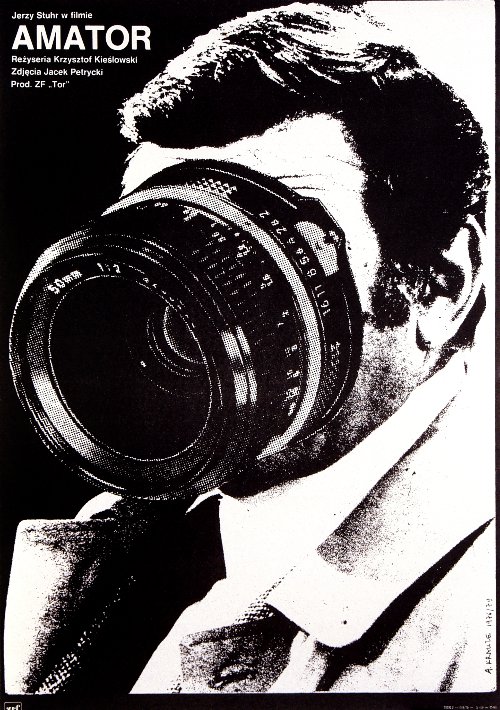
Alas, no man with a camera should be trusted.
Regard anyone who claims to be an amator with a deep sense of suspicion. Optical organs should be especially wary filmmakers from Spain. But retina shaves aside, these spheres - unenviably tasked with providing sight - are not altogether different from the humans that they serve. Shape, for example, is hardly uniform. Due to astigmatism, soulful portholes differentiate in both shape and size. Colors are prone to vary as well. Models are available in blue, green, brown, or black; occasionally even two at a time.
Similarly, humans are innately ingrained with an apt aesthetic appearance.
It should be noted though, that no single form is more appealing than another. Despite media portrayals, fair skin does not equate to glamor example. The cults of Beyonce, Rihanna, and Serena Williams are strong. Neither Miley Cyrus nor lightening cream is all necessary. It was the Based God himself, Lil B that sang, "No black person is ugly;"
And just such a sentiment is echoed by Dj K30. A effectively bare song, "Tarraxo da Preta" is built around a slow zouk beat. Drums and cymbals are not overly relied upon, though. Instead, the Txiga beatmaker makes no secret of his experimental tendencies. Rhythmic roles are regularly reversed; evident from the brief, introduction onwards. Once the bass knocks four beats, the song is coaxed. The interlude that follows only adds to the suspense. A shaker carries the main rhythm, djembe syncopate. Hi-hat/snare are used only as a hitch on third beats. Transitions are equally as bold with either percussive fills or frantic guitar strumming indicating a transition in a song that rapidly develops as Introduction-A-B-C-D-A-D-Outro. The melody is carried by one of three tone-generating synth loops, fitting well among the laborious track. Likewise, bass alters between two patterns: one skipping, and one straighter four to the floor.
Mastering is not perfect, but the melody is surprisingly nice. A download is certainly recommended.
Notable Mention: StressMusik - "Black Power"
The second selection is no less shy.
An artery of emotion deliberately punctured as the audience is left the sound of it bleeding out.
Although the title may suggest a militant theme, "Black Power" is nothing of the sort. Musical Midas has returned and the results, once again the results are resplendent and ravishing. The song that follows is a ghetto zouk constructure around a kick/snare beat. Although a scraper is heard only on the introduction claps are used to syncopate throughout. Likewise, a ride cymbal is used for transitions while a splash marks the end of each sixteen-beat bar. Bass is middling, but heavy as the feelings that loom over the last dance of a happy couple. But as well organized as the rhythm may be, the main attraction to any StressMusik song is the melody; and "Black Power" is no exception. Structured Introduction-A-B-interlude-C-interlude-D-Outro, the first half of the song is noticeably different from the conclusion. In addition to an ambient, harmonic synth, a second the glitches from the introduction carry over to the first two verses. After the first interlude, however, the key changes as the synth resting on cloud nine becomes actively engaged. Guitar is no longer plucking out notes but instead. eschewing a prideful collection of notes. A third, final high-pitch funk synth plays as well, completing the transition from melancholy to success; if one were so inclined to an underlying message within the song, perhaps one that follows a duality of unique to the African diaspora's experience.
Truth be told, partiality is rapidly becoming an issue with the author. While each artist is typically given one fair shake on these pages, the musician seems featured below seems to to be slowly taking over the sight. But if that means more of StressMusik's work, so be it.
- J.N.
Alas, no man with a camera should be trusted.
Regard anyone who claims to be an amator with a deep sense of suspicion. Optical organs should be especially wary filmmakers from Spain. But retina shaves aside, these spheres - unenviably tasked with providing sight - are not altogether different from the humans that they serve. Shape, for example, is hardly uniform. Due to astigmatism, soulful portholes differentiate in both shape and size. Colors are prone to vary as well. Models are available in blue, green, brown, or black; occasionally even two at a time.

Similarly, humans are innately ingrained with an apt aesthetic appearance.
It should be noted though, that no single form is more appealing than another. Despite media portrayals, fair skin does not equate to glamor example. The cults of Beyonce, Rihanna, and Serena Williams are strong. Neither Miley Cyrus nor lightening cream is all necessary. It was the Based God himself, Lil B that sang, "No black person is ugly;"

And just such a sentiment is echoed by Dj K30. A effectively bare song, "Tarraxo da Preta" is built around a slow zouk beat. Drums and cymbals are not overly relied upon, though. Instead, the Txiga beatmaker makes no secret of his experimental tendencies. Rhythmic roles are regularly reversed; evident from the brief, introduction onwards. Once the bass knocks four beats, the song is coaxed. The interlude that follows only adds to the suspense. A shaker carries the main rhythm, djembe syncopate. Hi-hat/snare are used only as a hitch on third beats. Transitions are equally as bold with either percussive fills or frantic guitar strumming indicating a transition in a song that rapidly develops as Introduction-A-B-C-D-A-D-Outro. The melody is carried by one of three tone-generating synth loops, fitting well among the laborious track. Likewise, bass alters between two patterns: one skipping, and one straighter four to the floor.
Mastering is not perfect, but the melody is surprisingly nice. A download is certainly recommended.
Notable Mention: StressMusik - "Black Power"
The second selection is no less shy.
An artery of emotion deliberately punctured as the audience is left the sound of it bleeding out.
Although the title may suggest a militant theme, "Black Power" is nothing of the sort. Musical Midas has returned and the results, once again the results are resplendent and ravishing. The song that follows is a ghetto zouk constructure around a kick/snare beat. Although a scraper is heard only on the introduction claps are used to syncopate throughout. Likewise, a ride cymbal is used for transitions while a splash marks the end of each sixteen-beat bar. Bass is middling, but heavy as the feelings that loom over the last dance of a happy couple. But as well organized as the rhythm may be, the main attraction to any StressMusik song is the melody; and "Black Power" is no exception. Structured Introduction-A-B-interlude-C-interlude-D-Outro, the first half of the song is noticeably different from the conclusion. In addition to an ambient, harmonic synth, a second the glitches from the introduction carry over to the first two verses. After the first interlude, however, the key changes as the synth resting on cloud nine becomes actively engaged. Guitar is no longer plucking out notes but instead. eschewing a prideful collection of notes. A third, final high-pitch funk synth plays as well, completing the transition from melancholy to success; if one were so inclined to an underlying message within the song, perhaps one that follows a duality of unique to the African diaspora's experience.
Truth be told, partiality is rapidly becoming an issue with the author. While each artist is typically given one fair shake on these pages, the musician seems featured below seems to to be slowly taking over the sight. But if that means more of StressMusik's work, so be it.
- J.N.
A Noggle Brain Trust, LLP. website
Monday, May 11, 2015
Monday Morsels (11 May 2015)
eh.. you know
After three long hours, there is just no end in sight for the most odious vocal performance in history
The devil's bird resides in the heart of the Valley of the Sun.
If nothing else the song is derivative. Any number birds could recreate the spread of sounds being produced; quite literally any amount. What this avian lacks in creativity it more than compensates for in range. Rarely has a sound been repeated since the show started. Variety is the essence of both music and life. Yet to claim an identity crisis seems, to the authors, like a stretch. If nothing else, the singer has shown a fervent sense of conviction. Breathes are few and far between. At no moment has any musical assistance been offered. Not all birds of a feather flock together.
And who could blame any creature able to escape the echo chamber from doing so?
Throughout the house - even at the corner store on an quick provisions run - its singing resounds.An amphitheater is simply not required. Put away the clay masks. Make sure to properly wrap the microphone cord before putting it back into storage. Either this bird has a set of human sized lungs or an optimal location has been scouted in advance. Needless to say, the audience reach has been maximized. Annoyance aside, though, the feat merits praise for its duration; although the fowl is hardly alone in its feat. The Beatles were known to perform between four and six hour gigs during their early days in Hamburg's red light district. Jam bands of any era have cut their teeth with marathon sets. Alas, no band can compare tto the length of and breadth of The Grateful Dead.
Hardly could that be considered keeping poor company.
And, truth be told, the bird is not even the most pressing problem. Any interest parties should note that the author's view on the cloud empire has already been made known. Of greater importance, then, is what this organic slapper represents: no control can be exercised over the track. The bird possesses complete sovereignty over the airwaves despite there only being one king of all media. An entertainer that pierces all media, though, is comparable, if not worse, to a beating heart under the floorboards; like a soundtrack that was not requested and cannot be stopped.
It is as if Koyaanisqatsi has been reimagined as a psychological thriller.
Naturally, then, the author's mind turns to music. Not only can earbuds drown any external sounds, but dulcimer dance melodies are typically featured (and enjoyed) on these pages. Loops are loving lauded. Yet it can be said that the difference between these sounds and the alluvian avian song is negligible. What makes one necessarily superior to the other? The answer is deeper than mere control over the pause/play button.
Music is the baseball of art, after all.
Aural compositions stand apart from other creative endeavors. A painting can be seen for a second just as easily as an infinite amount of time. Likewise, books are typically read at individually preferred paces. Even video games allow the option a range of different difficulties. But music and film stand alone. Both forms of expression require a tacit contract; a preordained amount of time must be committed to enjoying the entertainment as a whole. Each part represent a pixel on the overall image. Pace cannot be negotiated. Likewise, at least 51/54 outs are required for a baseball game to run its course. The amount of time varies as the events unfold, of course. But only an external force - in the ball & stick game's case, the elements - which can ultimately alter the inevitable course of events
But, for now, it seem that the bird has finally found the need for an intermission. The canary far away from has the waterfront stopped singing even if it could have been a contender. A decision must now be made on what will fill the silent void that follows.
Excessive ranting and raving now sufficed, onwards to this week's selections..
All pictures suffer the same malady. Subjects may be in focus. Each element, likewise, could be well aligned and lit to taste. But whether the image is printed, viewed on a screen, or culled from a dark room is ultimately irrelevant: presented on a two-dimensional plane is an inherently three dimensional concept.
Such is the problem which has plagued DJ Ary on these pages as of late. In spite of being a competent sound selector - a recent mix of the Alto Nivel back-catalog supports such a claim - the author has nonetheless taken a single piece of the man's repertoire and used it as a less than positive an example. If for no other reason, then, the mid-tempo afro-house is presented below.
A joint effort, "Temporadas" sees the Mãn Juh producer team-up with independent beatmaker Puto Edson. But while the kuduro beat/bassline is unmistakable, the same cannot be said about its aesthetics. The four-to-the-floor kick drum is to be expected. Similarly, not much can be said for the clap fill on the quarter notes. It is the the two remaining drums, instead, that produce the most intrigue. Alongside the bass drum on the main beat is an indistinguishable metal percussive element that is present throughout. What remains is a cuica played on odd notes. Moreover, this friction drum serves a pragmatic purpose by occupying a rhythmic/melodic role on odd notes. After all, the two primary synths do not develop long, elegant phrasing. Each prefers a succinctness that allows for subtle adjustments throughout the two main section.
Coincidentally, the second selection is serviceable comparison to the song which precedes it.
Dadifox has been active for the past week. Rarely does the PDDG beatmaker debut consecutive songs with a similar sound. The present is no exception. Both instrumentation and beats typically follow a traditional vein. The approach to these tracks, however, is entirely unique to the Dj's style; aggressive without repelling listeners. It is for just this reason - in addition to the late week post on the matter - that the two kuduro-trap hybrids were not all alarming in appearance or surprising at their proficiency.
Alas, "Kibulos Grandes" fits nicely in the PDDG wheelhouse.
The tempo is much quicker than, "Temporadas." Likewise, the Dadifox song below is significantly more developed - the structure being Introduction-Chorus-Verse-V-C-V-V-C-Reprise with brief, but not rushed interlude transitions - in addition to placing a greater emphasis on treble than Ary and Edison. Case in point, an anthemic sixteen-beat melody central to the song. Carried by MIDI trumpet and flute, the melody is occasionally harmonized by a synth hum. Mid-way through the track, however, both sounds cut. A four-beat synth effect similar to past Txiga ventures is used among the sound of kuduro snare. But aside from this instance, a common thread is heard on the rhythm. Djembe tone slap syncopate on even beats while the shaker maintains steady on the triplets. The foundational beat, however, is made up of an indecipherable piece of percussion. A vaguely breakbeat notion is kept up as well. And like the instrument's identity, the sound itself is unique in its vaguely Brazilian funk profile.
As usual, the download is highly recommended
For his part, Firmeza was a staple presence last week as well.
In addition to a new track of his own accord, a second sound credited to the PDDG mainstay appeared as part of an upcoming Warp Records EP tease. The scene's profile is growing. Each of the stars are receiving more exposure But most surprising about "Noite Principe unica," is what, on the surface, appears to be a radical departure.
Fortunately, such is only the case on a surface level. As with nearly any Firmeza song, what follows is inherently rhythmic. The main beat is a kick/snare/clap with closed hi-hat syncopating. An open hi-hat is used briefly as well as a hand drum later on in the song's development. After all, there was plenty of room to grow when the layout is made up of verses; Introduction-A-B-interlude-C-interlude-D-E. Melodically, however, the song is rather slim. The nearest comparison is the last batch of BNM releases, which yet be groundbreaking in their own right. Which is to say that the bass frequencies are inseparable from the track itself. Phrasing is never longer than four beats. Key changes mark sectional ranges along with rhythmic variety. Synth and some record effort are used for both rhythmic and harmonic purposes. The cross-over potential is undeniable but the make-up is still elusively lusophone.
Fighting progress is futile. Evidently this new brand of song will come to form the next wave of Lisbon's infectious dance music. But, while not to the author's taste, optimism can be found is the notion that the development is still in a decidedly proto-stage.
- J.N.
A Noggle Brain Trust, LLP. website
Subscribe to:
Posts (Atom)